
As part of the 2025 Joint General Assembly in London, the coordinators of three Horizon Europe consortia, OSIRIS, TIER2, and iRISE, came together for a collective interview to reflect on their shared achievements, project synergies, and emerging priorities for strengthening reproducibility across European research systems.
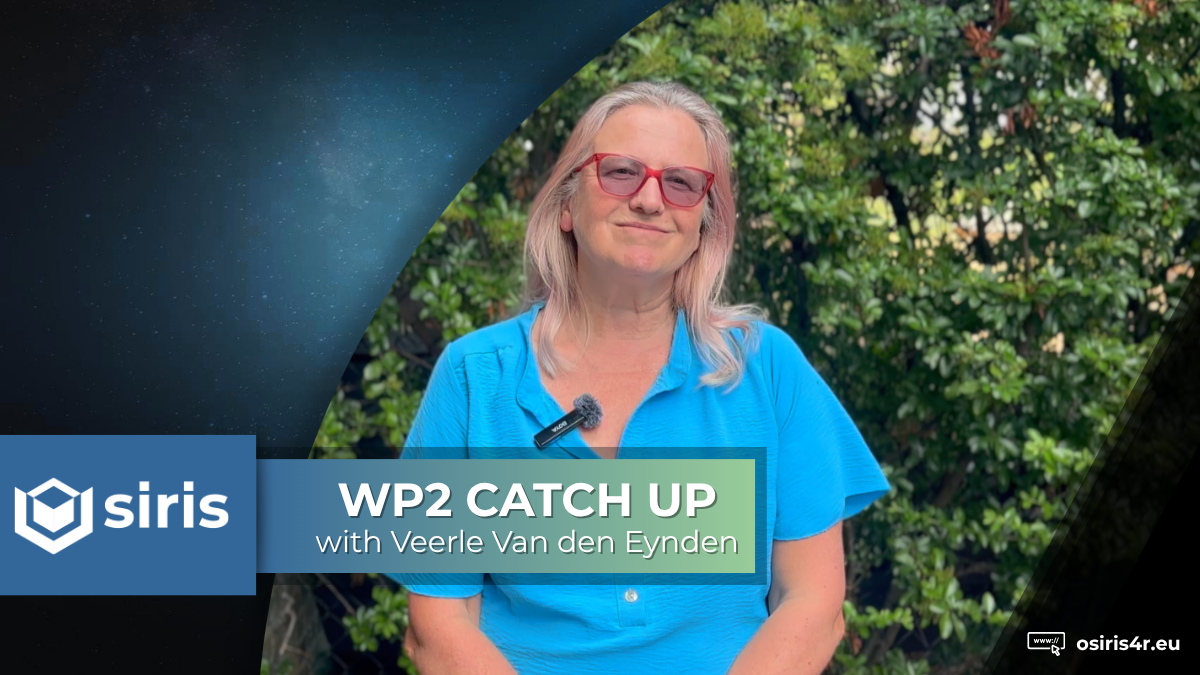
A video capturing their key insights is featured below.
Participating in the discussion were Dr. Sarah McCann (iRISE), Dr. Inge Stegeman (OSIRIS), and Dr. Tony Ross-Hellauer (TIER2), with Assoc. Prof. Dr. Hynek Roubík (OSIRIS Communication & Dissemination Lead) facilitating the conversation.
Collaboration as a driver of progress
The coordinators emphasised that the strength of the partnership lies in the diversity of perspectives, methodological approaches, and expertise across the three projects. Despite coming from different scientific domains, all consortia share the same overarching goal: improving reproducibility through evidence-based interventions, policy recommendations, and community-driven practices.
They noted that the collaboration allows the projects to align protocols, compare methodologies, exchange expertise, and jointly reflect on challenges, leading to stronger, more coherent outputs than would be possible independently.
Shared achievements and methodological synergies
A recurring theme throughout the discussion was the collective impact of the joint scoping review, conducted by OSIRIS and TIER2, which now serves as a foundation for multiple outputs across the partnership. The review directly informed iRISE’s SOLES platform, enabling the team to apply machine-learning methods and build an interactive evidence resource for the wider community.
The coordinators also highlighted complementary work on reproducibility audits, computational reproducibility, and the use of diverse methodological approaches, from randomised controlled trials and Delphi studies to qualitative auto-ethnography. Together, these efforts form a rich and multifaceted evidence base for improving research practices.
Real-world applications and concrete tools
All three coordinators pointed to several outputs with potential for immediate practical use. Among them:
- A checklist for reproducible practices developed through a Delphi process
- A catalogue of 50+ reproducibility metrics identified across scientific domains
- TIER2’s Reproducibility Monitoring Dashboard
- Tools for researchers, funders, and publishers, including workflow supports and intervention designs
- OSIRIS’s developing audit framework for assessing reproducibility in research projects
Collectively, these tools offer researchers, institutions, and funders tangible ways to improve research quality and transparency.
Challenges and lessons learned
The coordinators acknowledged shared challenges in engaging stakeholders, especially publishers, funders, and external partners, where willingness to collaborate is often high, but administrative and structural constraints slow progress.
Early engagement, clearer expectations, and more inclusive involvement of non-metascience communities were highlighted as key lessons for future projects.
Looking ahead: results, recommendations, and future collaborations
With each consortium in a different phase of its timeline, the upcoming months will bring substantial developments:
- The release of pilot results and new tools from TIER2
- The first emerging results from RCTs and observational studies in OSIRIS
- Ongoing expansion of the SOLES platform and training resources in iRISE
The coordinators also expressed enthusiasm for shaping a shared roadmap for future research, building on the strong relationships formed across the consortia. New collaborations, proposals, and joint initiatives are already emerging from the network developed through this partnership.
A shared message to the wider community
In closing, the coordinators emphasised that improving reproducibility requires coordinated action across stakeholders, researchers, institutions, publishers, funders, and policymakers. Structural barriers must be reduced, collaboration encouraged, and systems aligned to make reproducible practices the default.





Keep In Touch