
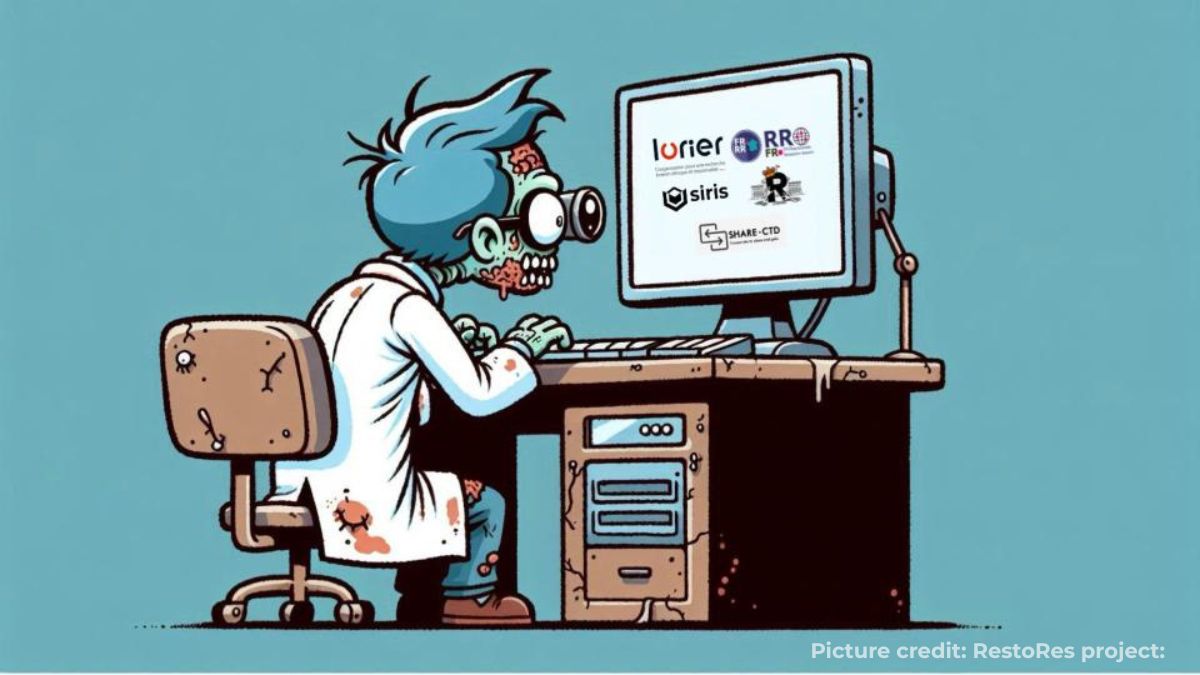
Earlier this year, OSIRIS had the honour of opening the LORIER Webinar Series: Reproducibility and Meta-Research, a new initiative organised by the RestoRes project and hosted by the University of Rennes. The series brings together leading researchers and initiatives committed to improving the quality, transparency, and reliability of scientific research through open science and meta-research practices.
In the inaugural session, Dr. Rita Banzi, Coordinator of the OSIRIS activities at the Mario Negri Institute in Milan, presented the webinar “OSIRIS Items for Reproducibility and Invitation to Join Interventional Studies.” Her talk outlined OSIRIS’ core activities, including the development of tools to assess and enhance reproducibility, and extended an open invitation to research teams interested in collaborating in upcoming interventional studies.
Missed the session?
You can now revisit the full webinar recording, published by the LORIER/RESTORES team, and explore the highlights on their website at:
The session also featured recent insights from the OSIRIS scoping review on open science interventions (published in Royal Society Open Science), which underscores the need for more rigorous empirical evidence on the effectiveness of open science practices in improving research quality.
The LORIER Webinar Series continues to serve as an important platform for exchange between EU-funded projects, scholars, and practitioners working to strengthen research integrity and reproducibility across disciplines. OSIRIS is proud to have contributed to the launch of this initiative and remains committed to advancing collaboration and transparency in science.
NOTE: This post is a cross-publication of the original feature published by the RestoRes project. You can access it on their website here.
Stay tuned for updates on other OSIRIS activities! Visit our website to read our blogs and events section and follow us on social media to discover what’s new and how you can get involved!
OSIRIS “Creating Trust in Open Science & Reproducibility through Accessibility and Transparency!”






Keep In Touch