
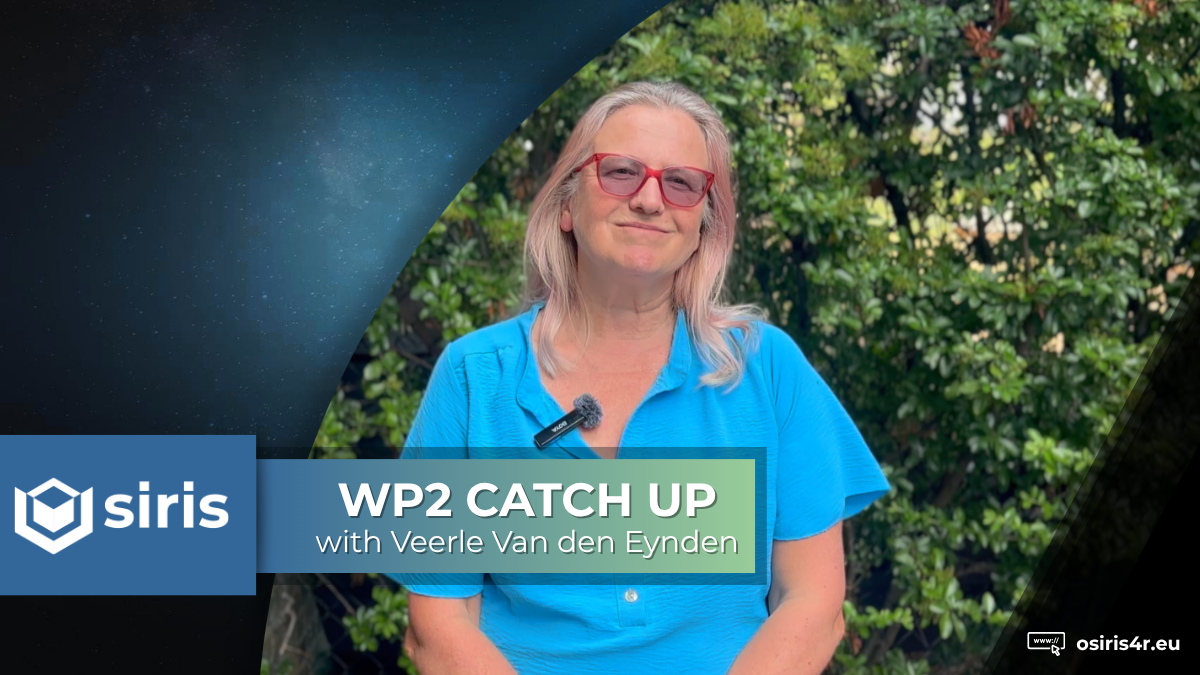
As OSIRIS moves closer to its final phase, Work Package 2 has reached a significant milestone: the completion of its planned research activities. The focus now shifts to publishing findings, developing policy recommendations, and ensuring that the evidence gathered throughout the project contributes to lasting improvements in research reproducibility.
In this edition of the Catch Up with the OSIRIS Work Package Leads series, we speak with Veerle Van den Eynden, leader of Work Package 2, about the achievements, insights, and next steps emerging from one of the project’s most comprehensive research efforts.
Watch the Video:
Investigating the Drivers of Reproducibility
Work Package 2 was designed to better understand the factors that influence research reproducibility across Europe.
The team explored the drivers, facilitators, barriers, and motivations that shape how researchers approach reproducibility in their daily work. To achieve this, researchers conducted an extensive programme of qualitative research involving stakeholders from different disciplines, career stages, and geographic regions.
One of the most significant achievements was the completion of interviews with 60 researchers from across Europe.
The interviews explored questions such as:
- What does research reproducibility mean in practice?
- How do researchers incorporate reproducible practices into their work?
- What motivates researchers to adopt transparent and open approaches?
- What barriers continue to hinder reproducibility?
The resulting dataset provides valuable insight into how reproducibility is understood and implemented across the European research landscape.
Turning Evidence into Open Research
The interview programme represents a substantial body of work that is now being transformed into scientific publications.
Importantly, the project is committed to transparency not only in its findings but also in its research process. Alongside the resulting publications, interview transcripts will be made available to support openness and enable further exploration of the evidence.
This reflects the very principles of transparency and reproducibility that OSIRIS seeks to promote.
Assessing Openness Across the Research System
Another major strand of Work Package 2 focused on examining policies that influence research behaviour.
The team analysed the policies of:
- Research funders
- Research institutions
- Academic journals
Using the updated TOP (Transparency and Openness Promotion) Guidelines, researchers assessed how these influential actors promote openness and transparency through their policies and guidance documents.
While the TOP Guidelines have traditionally been applied to journals, the OSIRIS team explored how the framework could also be used to evaluate research institutions and funding organisations.
This pioneering work offers new insights into how reproducibility-supporting policies are implemented across the broader research ecosystem.
Progress Made—But Challenges Remain
Preliminary findings suggest that awareness of open research practices continues to grow.
Many institutions and organisations now include provisions on data and code sharing, as well as transparency, in their policies. However, translating these commitments into everyday research practice remains a significant challenge.
The findings also highlight the importance of embedding openness and reproducibility into research assessment systems and career development frameworks, ensuring that researchers are recognised and rewarded for adopting good practices.
“There is still a long way to go in really putting that into practice.” – Veerle Van den Eynden
From Research Findings to Policy Recommendations
With the research phase complete, Work Package 2 is now entering its final and highly influential stage.
The focus is shifting toward:
- Scientific publications
- Policy briefs
- Stakeholder recommendations
- Evidence synthesis
These outputs will support decision-makers across the research landscape, including:
- The European Commission
- Research funders
- Research institutions
- Publishers
- Academic journals
The goal is to ensure that the evidence generated through OSIRIS contributes to meaningful and lasting improvements in research reproducibility.
Looking Ahead
As publications are finalised and recommendations are developed, Work Package 2 will play a key role in translating research evidence into practical guidance for stakeholders across Europe.
The findings generated through interviews, policy analyses, and evidence reviews are expected to inform future initiatives that promote transparency, openness, and reproducibility in research.
About the Catch Up with the OSIRIS Work Package Leads Series
Recorded during the OSIRIS General Assembly in London, this interview series highlights the achievements, challenges, and future plans of the work packages driving the project. As OSIRIS moves toward its final symposium, The Legacy of OSIRIS: Open Science for Reproducible Research, taking place on 5–6 October 2026 in Prague, Czech Republic, the series offers an opportunity to reflect on the project’s progress and emerging impact.
Stay tuned for updates on other OSIRIS activities! Visit our website to read our blogs and events section and follow us on social media to discover what’s new and how you can get involved!
OSIRIS “Creating Trust in Open Science & Reproducibility through Accessibility and Transparency!”






Keep In Touch