
How can researchers assess whether a study is likely to be reproducible? And how can practical tools help improve research practices across disciplines?
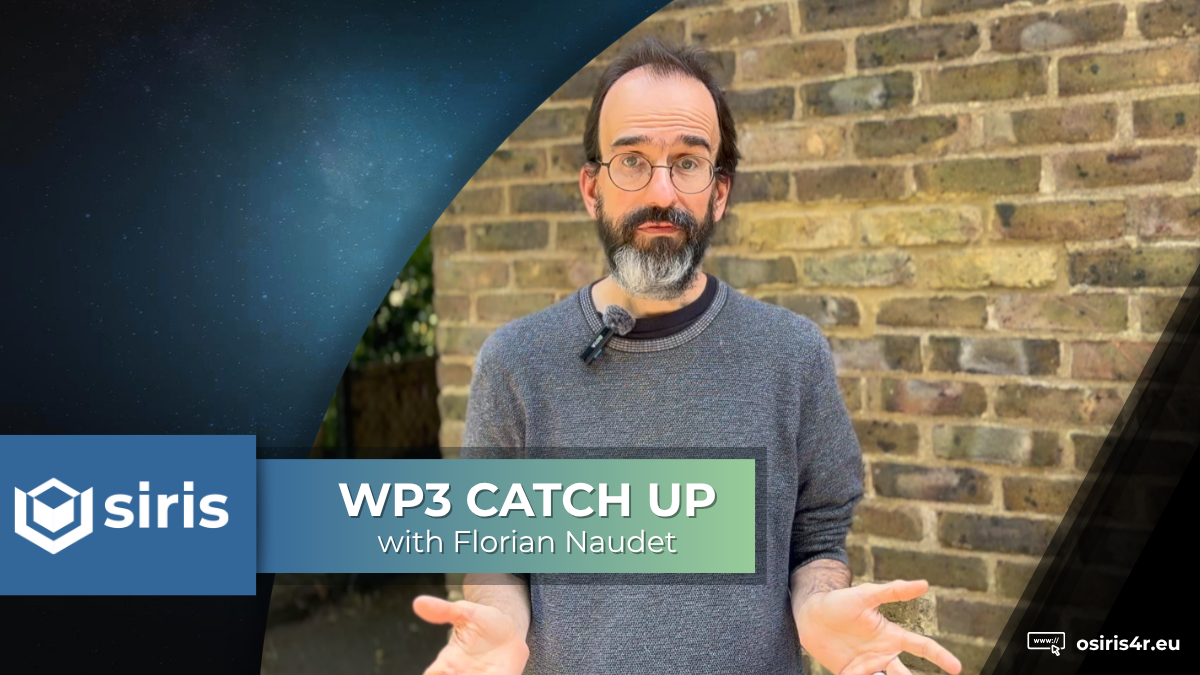
In this edition of the Catch Up with the OSIRIS Work Package Leads series, Florian Naudet, Professor of Therapeutics at Rennes 1 University and leader of Work Package 3, shares the latest developments from a work package focused on transforming reproducibility principles into practical tools and interventions.
Watch the Video:
Building the OSIRIS Reproducibility Network
One of the major achievements of Work Package 3 has been the establishment of the OSIRIS Reproducibility Network.
The network brings together researchers and professionals interested in advancing reproducible research and provides a platform for collaboration, knowledge exchange, training, and participation in OSIRIS activities.
By connecting stakeholders from different disciplines and backgrounds, the network supports the project’s broader goal of fostering a stronger culture of transparency and reproducibility across the research ecosystem.
Developing a Reproducibility Checklist
Alongside building the network, Work Package 3 has focused on developing practical tools that can support researchers in evaluating and improving reproducibility.
A key achievement has been the development of a reproducibility checklist through a structured Delphi process. The checklist aims to help researchers assess important aspects of a research project or scientific publication that may influence its reproducibility and replicability. The development process involved extensive consultation with a diverse group of stakeholders representing different disciplines, sectors, and areas of expertise. Through multiple rounds of discussion and consensus-building, participants identified the most important elements that should be prioritised when evaluating reproducibility.
“We reached some kind of consensus on reproducibility checks that one can make on a given research project or research article.” – Florian Naudet
From Development to Implementation
Creating a checklist is only the first step.
The next challenge is understanding whether such a tool can effectively influence research practice. To address this question, the OSIRIS team is preparing a large randomised controlled trial that will evaluate the implementation and effectiveness of the reproducibility checklist in real-world settings. This study represents an important milestone for the project, moving beyond theory and into practical application.
The results are expected to provide valuable evidence about how interventions can support better research practices and improve reproducibility outcomes.
Introducing the OSIRIS Observatory
Another major deliverable currently under development is the OSIRIS Observatory. The observatory aims to apply automated methods to assess the presence of Open Science practices across large numbers of research articles and journals.
Using computational tools, the observatory will help identify indicators of transparency and openness and provide insights into how these practices are being adopted across the scientific literature. Interestingly, preliminary testing has revealed that existing automated tools may not perform as effectively as expected. This finding highlights the need for continued development and evaluation of methods used to monitor Open Science practices.
Looking Ahead
With the reproducibility checklist completed and the observatory nearing launch, Work Package 3 is entering an exciting new phase. The upcoming randomised controlled trial will provide an opportunity to test whether reproducibility interventions can create measurable improvements in research practice. At the same time, the observatory will offer new ways of monitoring and understanding Open Science implementation across the research landscape. Together, these activities demonstrate how OSIRIS is moving beyond identifying challenges to developing and testing practical solutions.
About the Catch Up with the OSIRIS Work Package Leads Series
Recorded during the OSIRIS General Assembly in London, this interview series highlights the achievements, outputs, and future plans of the teams driving the project. As OSIRIS approaches its final symposium, The Legacy of OSIRIS: Open Science for Reproducible Research, taking place on 5–6 October 2026 in Prague, Cech Republic, the series provides an opportunity to reflect on the project’s progress and future impact.
Stay Connected
The next months will bring several important milestones for Work Package 3, including the launch of the OSIRIS Observatory and the start of the large-scale randomised controlled trial. Stay tuned for updates on other OSIRIS activities! Visit our website to read our blogs and events section and follow us on social media to discover what’s new and how you can get involved!
OSIRIS “Creating Trust in Open Science & Reproducibility through Accessibility and Transparency!”





Keep In Touch